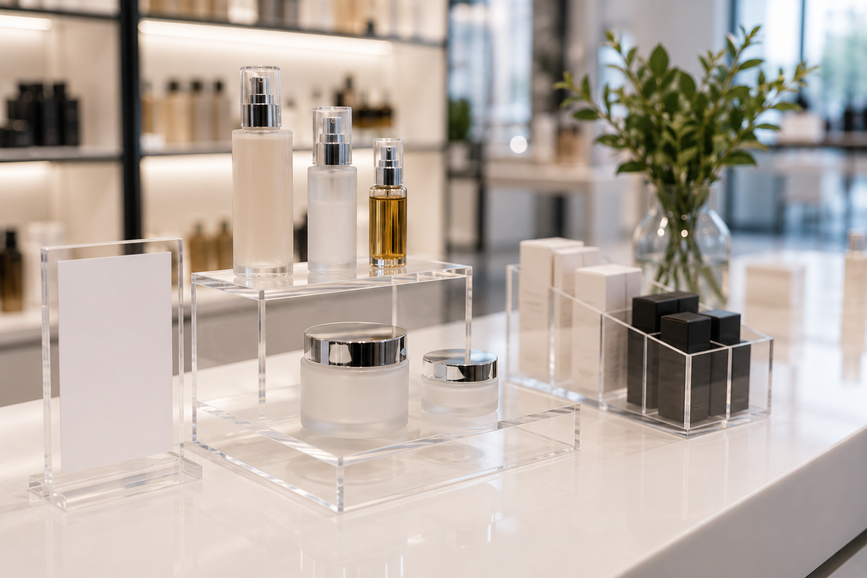
Acrylic for Retail: Custom Displays and Merchandising Fixtures That Sell
Posted by Huang Acrylic on May 14th 2026
Acrylic for retail is one of the most flexible ways to create a shopping experience that feels intentional and premium. If you are wondering whether acrylic for retail is worth the effort, the short answer is yes when it is designed around your products, your space, and your customers.
At Huang Acrylic, we design and manufacture premium acrylic products, with decades of experience serving discerning customers in home, office, awards, and display environments. That same expertise now supports retailers who need custom solutions instead of one size fits all fixtures.
Why Acrylic Works So Well in Retail
Acrylic for retail works best when you want the visual lightness of glass without the weight or fragility. High quality acrylic is optically clear, durable, and easier to shape into custom forms than glass, which makes it ideal for high traffic stores where fixtures are moved and handled often.
Because acrylic can be cut, bent, bonded, and polished into almost any shape, you are not locked into generic bins or shelves. You can tailor thickness, footprint, and finish to match what you sell, whether that is:
- Cosmetics and skincare
- Small electronics and accessories
- Housewares, gifts, and decor
- Awards, recognition pieces, and branded merchandise
Custom pieces also help align fixtures with your brand. A simple change in edge profile, height, or logo placement can make the difference between “this looks fine” and “this looks like us.”
How Retailers Use Acrylic Displays Every Day
Walk through a well merchandised store and you will see acrylic displays doing quiet but important work at every turn. Common applications include:
- Acrylic risers and pedestals that bring hero products up to eye level
- Tiered acrylic displays that keep multiple SKUs visible on a small footprint
- Sign holders and price displays that protect printed materials while preserving clean sightlines
- Bins, trays, and organizers at checkout and impulse zones
- Clear control pieces where you need visibility and durability at the same time
Huang Acrylic already offers a broad catalog of trays, bowls, risers, organizers, and stands that many retailers use right out of the box. And, with the ability to customize, you might start from a proven piece, then modify:
- Dimensions and wall thickness for a heavier commercial use
- Edge finish for a more luxurious look
- Branding through engraving or color imprints
- Internal dividers tailored to your exact product sizes
The goal is simple: acrylic that looks intentional in your space and works hard for your staff.
Is Acrylic Better Than Glass for Retail Fixtures?
Retailers often ask a practical question: if I like the look of glass, why should I consider acrylic for retail fixtures instead?
Glass can be a good choice for permanent architecture, but acrylic usually wins in day to day merchandising on four fronts:
- Weight
Acrylic is significantly lighter than glass, which matters when staff are moving fixtures on and off shelves or resetting displays frequently. - Durability
Acrylic is more impact resistant, which reduces the risk of shattering in busy environments and makes it safer in back of house resets or during shipping. - Design flexibility
Custom acrylic displays can be bent, bonded, and detailed into shapes that would be difficult or cost prohibitive in glass. Tiered stands, nested organizers, and combination pieces are much easier to achieve. - Clarity and consistency
When you use 100 percent virgin acrylic, you get consistent clarity and color across pieces, which supports a clean, unified brand presentation.
For many of our customers, the choice is less about “glass versus acrylic” and more about “off the shelf versus custom.” Acrylic gives you glass-like clarity with far more control over form and function.
Four Step Process for Custom Acrylic Retail Projects
Custom work can sound vague until you see how it actually flows. At Huang Acrylic, we use a four step process to move retailers from idea to finished fixtures.
Step 1: Initial Scope and Requirements
Everything starts with a conversation. We gather:
- What you are trying to display or solve
- Timelines and key deadlines
- Budget ranges
- Any sketches, photos, or CAD drawings you already have
Budget is an important early input because it directly affects design choices like thickness, reinforcement, and finish. It helps us recommend what is possible, what is economical, and what will be durable enough for your use.
Step 2: Design and Engineering Guidance
Sometimes your team already has a finished design. In that case, we review it from a manufacturing perspective and suggest adjustments if needed, such as increasing thickness in stress points or simplifying complex features that would add unnecessary cost.
In other cases, you come to us with a clear purpose and rough idea, but no formal drawings. We help you translate use case into design by asking questions like:
- Why must this be acrylic instead of another material?
- How will customers and staff interact with it every day?
- Is your priority cost, longevity, or a specific aesthetic?
For example, an acrylic footstool used occasionally in a home shower will be designed very differently from a clear footrest used all day by casino dealers. The purpose drives the dimensions and reinforcements.
Because design takes real time and expertise, we may charge a design fee on complex projects, often structured so it can be credited toward production if the project moves forward. This is intended to keep both sides invested in getting the design right.
Step 3: Samples and Prototyping
Once the design is defined, we move into samples and prototyping. This might mean:
- A 3D printed mockup to test ergonomics and scale
- A full acrylic prototype that mirrors final production
This phase often takes several weeks, especially when shipping samples back and forth for review. As Sean Huang, CEO of Huang Acrylic explains, “We know where you can move things faster when customizing acrylic better than anyone in the acrylic industry. Keep in mind a six month timeline is typical when going from idea to something in hand.”
Step 4: Production and Delivery
After you approve the prototype, we move into production. Huang Acrylic coordinates manufacturing with trusted partners in Asia and leverages a strong presence in Taiwan to oversee quality and timelines.
Typical timing looks like:
- Roughly 1 to 2 months for production, depending on complexity and volume
- Around 1 month for ocean transport and final delivery, sometimes a bit longer based on logistics
From first conversation to fixtures in hand, a brand new custom design often spans several months, with simpler projects moving faster.
Practical Ideas for Custom Acrylic in Your Store
Once you understand what custom acrylic can do, it becomes easier to see opportunities across your floor. Retailers often use custom acrylic displays to:
- Create feature tables that mix trays, risers, and other pieces into a unified look
- Build category specific fixtures for nail polish, fragrance, tech accessories, or packaged snacks
- Align in store displays with branded acrylic awards or gifts used in loyalty or recognition programs
- Combine standard Huang Acrylic pieces with custom coloring or engraving for a semi custom program.
We are able to adapt proven designs, so in many cases, we are not starting from a blank page.Then we tune dimensions, thickness, and decoration to the way your customers actually shop and how your staff needs to work.
Turning Acrylic Ideas Into Retail Reality
Acrylic for retail is not just a material choice. It is a way to make your fixtures clearer, more durable, and more aligned with how you sell. When you pair the versatility of custom acrylic displays with a structured process and experienced manufacturing partners, you reduce risk and increase the odds that your final pieces will feel “right” on day one.
If you are exploring how acrylic for retail could work in your stores, contact Huang Acrylic through huangacrylic.com or by phone to start an initial scope conversation. We will help you move from a rough idea to a design, a prototype, and finally a finished acrylic display that fits your brand and your floor.
FAQs: Custom Acrylic for Retail
- How long does a custom acrylic retail project usually take?
A brand new custom design typically spans several months. Design and engineering can take a few weeks, prototyping often adds another month, and production plus shipping usually requires 2 to 3 additional months. - Do I need finished CAD drawings before contacting Huang Acrylic?
No. CAD drawings help, but they are not required. If you already have drawings, we review them and recommend improvements from a manufacturing perspective. If you do not, we focus on your use case, rough dimensions, and priorities, then help translate that into a buildable design, often with a design fee that can be credited toward production. - What kinds of customization are available for acrylic displays?
You can customize both the product and the decoration. On the product side, we adjust dimensions, thickness, shapes, reinforcements, and hardware to fit your application. On the decoration side, options include engraving, color imprints, different colored acrylics, and custom packaging or inserts when needed. Some decorations can be handled at the factory, while certain final touches, such as adding individual names on awards, can be done in the United States for accuracy and timing. - What's a minimum order quantity (MOQ) on a custom acrylic project?
Custom acrylic projects typically require a 600pc minimum, depending on the design. For smaller items the MOQ may be increased to 1200pcs. Contact us to discuss your acrylic project for more information
- Can you do a custom injection mold?
Yes we can and we do! Whether your project requires acrylic or another type of plastic, in our over 45 years of experience we have developed many factory relationships in Asia including injection molders and can bring your vision to reality with turnkey service.
